
What is Goshuin? Complete Guide to Sacred Japanese Stamps
What is goshuin? Learn everything about Japan's sacred temple stamps—meaning, history, how to collect them, costs, etiquette. Complete beginner guide with photos.
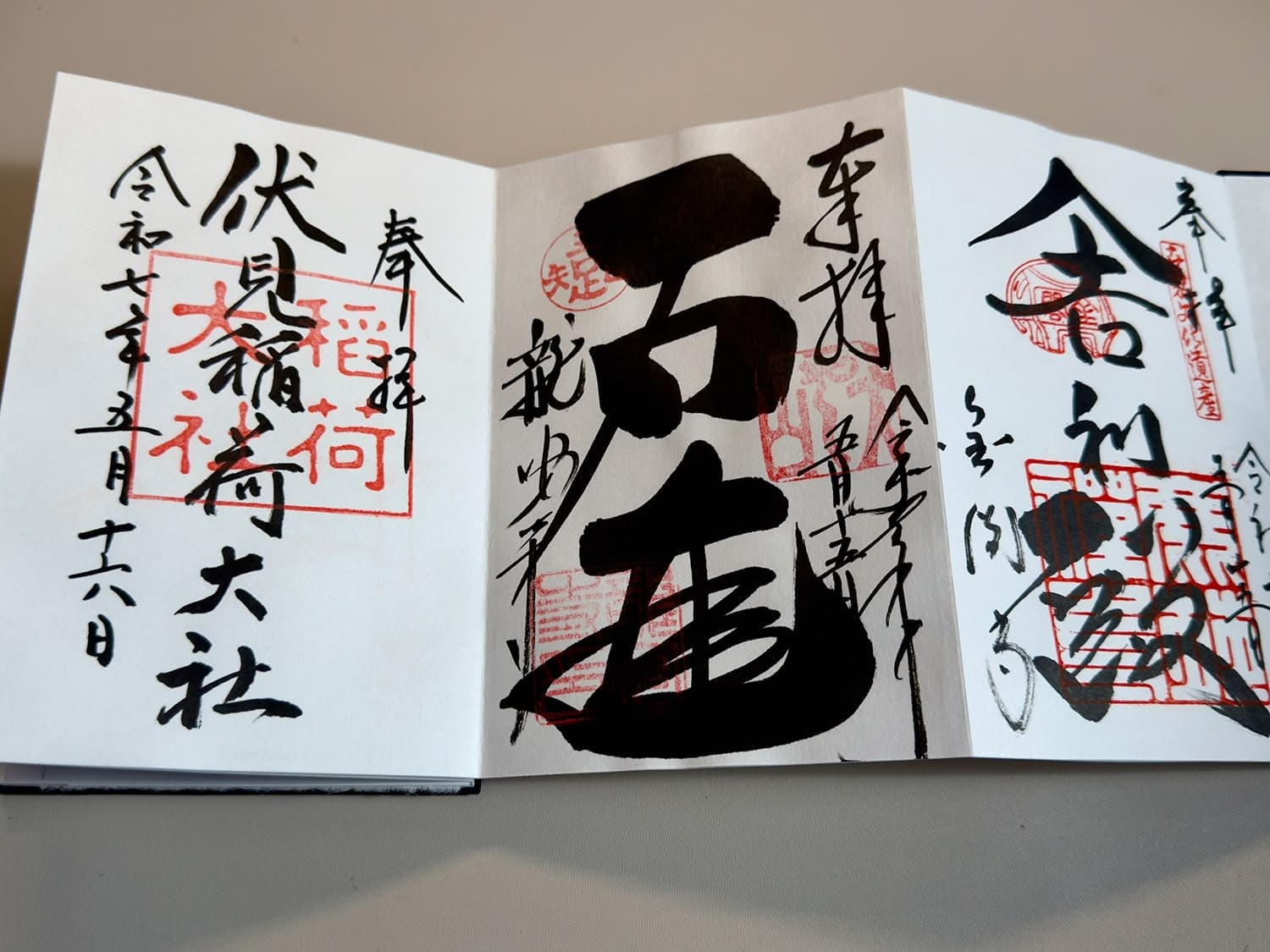
I have 11 goshuin in my goshuincho. Not many compared to serious collectors, but enough to understand why people become obsessed. Building Goshuin Atlas pushed me to research every detail of this tradition—from interviewing experienced collectors to analyzing temple etiquette to making my own beginner mistakes during two weeks in Japan (May 2025).
I'm early enough in the journey to remember exactly what confused me. But I've done the research to explain it clearly.
What is Goshuin? Quick Answer
A goshuin (御朱印) is a sacred stamp you receive at Buddhist temples and Shinto shrines in Japan. Each one combines vermillion seal stamps with hand-brushed black ink calligraphy, creating a unique piece of art that serves as proof of your worship and a personal record of your journey.
Here's what surprised me most: these aren't pre-printed stamps. A calligrapher hand-brushes each one while you wait (2-5 minutes). Watching this happen at [TEMPLE_1] in May 2025—the precision, the silence, the wet ink handed back to me—I understood this wasn't a tourist activity. This was participating in a 1,300-year tradition.
Goshuin at a Glance
- What
- Sacred stamps from temples/shrines
- Components
- Red seal + black calligraphy
- Cost
- ¥300-500 per stamp
- Book needed
- Goshuincho (special stamp book)
- Who can collect
- Anyone who visits and prays
- Meaning
- Proof of worship, spiritual record
The Meaning of "Goshuin"
While researching for Goshuin Atlas, I learned why temples take this so seriously. The kanji breakdown reveals the depth:
Breaking down the kanji:
- 御 (go): Honorific prefix showing respect
- 朱 (shu): Vermillion, the sacred red color
- 印 (in): Seal or stamp
Literal translation: "Honorable red seal" or "sacred vermillion stamp"
But that translation misses the weight. After researching hundreds of collector experiences and collecting my own, here's what goshuin actually represent:
- Proof of worship: Evidence you actually prayed (temples can tell if you skipped)
- Spiritual connection: A tangible link to sacred spaces
- Cultural participation: Joining a 1,300-year-old tradition
- Personal record: A visual diary you can flip through years later
What Does a Goshuin Look Like?
Every one is unique. Even from the same temple, no two are identical—each calligrapher creates slightly different compositions, brush pressure varies, seal alignment shifts. With 11 in my goshuincho, I've already seen this variation firsthand.
The Components
1. Red Seal Stamps (印)
- Temple or shrine crest
- Sacred symbols (lotus flowers, phoenixes, deities)
- Date stamps
- Multiple seals layered on top of each other
2. Black Ink Calligraphy (墨書き)
- Temple or shrine name
- Date of your visit (written in traditional Japanese calendar)
- Name of principal deity or Buddha
- Prayer, sutra verse, or blessing
3. Layout and Artistry
- Calligrapher creates the composition on the spot
- Each one slightly different even from the same temple
- Balance between red (seals) and black (calligraphy)
- Traditional Japanese aesthetic principles
Handmade Uniqueness
Each one is hand-brushed at the moment you receive it. I've heard from collectors who visited the same temple multiple times—their goshuin look similar but different (brush pressure, seal alignment, calligraphy spacing vary). That's the beauty of handmade art. Your collection is truly one-of-a-kind.
What Makes Them Special
Unlike tourist stamps or stickers:
- Handmade: Brush-painted while you wait (2-5 minutes typically)
- Sacred: Created by temple staff, monks, or priests
- Artistic: Each one is a small work of calligraphy art
- Meaningful: Represents a moment of worship and connection
- Collectible: Your collection grows in personal value over time
Goshuin vs Regular Stamps: The Difference
Before building Goshuin Atlas, I wondered if these were just fancy tourist stamps. After researching the tradition and collecting my own, the answer is a definite no.
What They're NOT
❌ Tourist collectibles: You can't just walk up and buy one—you must pray first ❌ Souvenirs: They're sacred objects, not trinkets ❌ Pre-printed: Every one is hand-brushed fresh while you wait ❌ Free: Fees (¥300-500) support temple maintenance and the calligrapher's work ❌ Quick stamps: Each takes 2-5 minutes of skilled calligraphy
What They ARE
✅ Proof of worship: You must pray before receiving one (no exceptions) ✅ Sacred art: Created by trained calligraphers ✅ Spiritual records: Document your personal pilgrimage ✅ Cultural tradition: 1,300+ years of continuous practice ✅ Living art: Each brush stroke is fresh and intentional
If you've walked Spain's Camino de Santiago and collected pilgrimage stamps, it's similar—but uniquely Japanese in artistic execution. The closest comparison I can make is Buddhist merit certificates from Tibetan temples, but even that doesn't quite capture it.
From Receipt to Art: The History
Here's the part nobody tells you: these started as bureaucratic receipts.
Picture this—Japan, 710 CE. You're a Buddhist monk who just spent three days hand-copying an entire sutra (sacred text). Your hand hurts. The ink stains your fingers. The temple gives you a red stamp as proof you did it. That's it. No calligraphy. No art. Just: "We received your sutra. Here's your stamp."
Fast forward to the 1600s (Edo Period). People want to participate but don't have time to copy sutras for days. Temples get creative: "Give us money instead. We'll still give you the red stamp." Smart business move.
But something unexpected happened—calligraphers started showing off. Simple stamps became compositions. Brushwork got elaborate. Shinto shrines saw this and thought, "We want in on this." Common people (not just monks) started collecting. Pilgrimage routes became popular. Dedicated stamp books appeared.
By the 1800s, these had stopped being receipts and became… well, what I have sitting on my desk right now. Art forms people plan trips around.
Today's practice: Anyone can collect them at most temples and shrines. Designs have become more elaborate (some seasonal ones are breathtaking). International visitors embrace the tradition. Digital tracking apps (like Goshuin Atlas) complement physical collections.
The core meaning hasn't changed though—still red stamps, still hand-brushed, still proof of worship. Just a lot more beautiful.
How to Get Your First Goshuin (Step-by-Step)
Here's the exact process I followed (and what I learned from interviewing experienced collectors). The steps are straightforward once you understand them:
Before You Visit
1. Buy a Goshuincho (御朱印帳)
You need the real thing—a specialized stamp book. Don't show up with a regular notebook (temples will politely refuse, and yes, I've seen this happen).
- Special accordion-fold book with thick washi paper
- Available at temples, shrines, stationery stores
- Cost: ¥1,000-2,500
- I bought mine at [TEMPLE_WHERE_YOU_BOUGHT_GOSHUINCHO] for ¥[PRICE] ([was first stamp included?])
Guide: Complete goshuincho buying guide
2. Prepare Exact Change
Most cost ¥300-500. Temple offices often can't make change easily, and having exact change ready saved me time at every temple.
- Bring small bills (¥500, ¥1000 notes) and coins
- Special seasonal ones can cost ¥1,000+
At the Temple or Shrine
3. Perform Purification (手水 - Temizu)
Find the water pavilion near the entrance and cleanse your hands and mouth with the ritual. I won't lie—I watched three other people do it before attempting my first one.
Full guide: Water purification ritual
4. Pray at the Main Hall FIRST
This is critical. Never request a stamp without praying. I learned this when a monk at my third temple gently reminded me (slightly embarrassing, but grateful he explained).
- Approach the main altar respectfully
- Follow proper prayer etiquette (varies by location, watch others if unsure)
- These are proof of worship, not tourist stamps
Always Pray First
Temples may refuse service if you skip praying. From my point of view, that's fair—these represent your worship, not just a visit. Always pray first, then request your stamp. It feels more meaningful that way anyway.
5. Find the Goshuin Office
Look for signs: 御朱印所 (Goshuin-sho) or 納経所 (Nōkyō-sho). Usually near the main hall or gift shop. Sometimes inside a building, sometimes at an outdoor counter.
6. Present Your Goshuincho
- Open to a blank page before approaching (not sure why this matters, but everyone does it)
- Hand to staff with both hands
- Say: "Goshuin onegaishimasu" (goshuin please)
- My Japanese pronunciation was terrible at first—temple staff still understood. Sometimes, Goshuin are organized by numbers, simply show the one you want with a hand gesture. Goshuin Atlas tried to indicate the number where there is one, so that should help you.
7. Wait Patiently
The calligrapher creates your stamp while you wait (2-5 minutes). During busy times (weekends, cherry blossom season), you might receive a number to return later.
Even after 11, watching this process never gets old.
8. Pay the Fee
- Typically ¥300-500 (special editions ¥1,000+)
- Place money in tray or hand directly
- Exact change appreciated (seriously)
9. Receive with Gratitude
- Accept book with both hands
- Say: "Arigatō gozaimasu" (thank you very much)
- Bow slightly to show respect
10. Let it Dry
Wait 2-3 minutes before closing your book. The ink needs time to dry—closing too early will smudge your goshuin (this is a common beginner mistake).
What is a Goshuincho? (The Stamp Book)
You can't collect goshuin without a proper goshuincho. Regular notebooks don't work (temples will refuse service). Here's why special books are required:
Why Special Books Are Required
Regular notebooks fail because:
- Thin paper bleeds through from wet brush ink
- Wrong binding style (not accordion-fold)
- Disrespectful to use casual notebooks for sacred stamps
- Temples will refuse service (I've seen it happen)
Goshuincho features:
- Thick washi paper: 120-160gsm prevents bleed-through
- Accordion binding: Fully opens to display your entire collection
- Elegant covers: Cloth or decorated designs (sakura, geometric patterns, temple motifs)
- Standard sizes: Accepted at all temples
Where to Buy One
Option 1: At Temples/Shrines (My recommendation)
- ¥1,000-2,500
- Often includes your first stamp (mine did!)
- Creates meaningful origin story
- Best locations: Sensō-ji (Tokyo), Fushimi Inari (Kyoto)
Option 2: Stationery Stores
- Tokyu Hands, Loft, Itoya (Tokyo)
- Compare many designs at once
- ¥1,200-3,500 depending on design
- Good for seeing quality differences before buying
Option 3: Online Before Trip
- Amazon Japan, Rakuten, Etsy
- Order 2-3 weeks before departure
- Can't inspect quality in person
Complete guide: Where to buy goshuincho and how to choose
How Much Do They Cost?
Individual goshuin are affordable, but costs add up quickly. Here's realistic budget planning based on typical collector experiences:
Standard Pricing
Regular stamps: ¥300-500
- Most common price point
- Year-round availability
- Traditional designs
Seasonal/Special editions: ¥500-1,000
- Cherry blossom season (spring)
- Autumn foliage designs
- New Year zodiac animals
- Worth the extra cost for special designs
Limited editions: ¥1,000-2,000
- Rare one-day-only designs
- Anniversary celebrations
- Famous calligraphers
- Two-page spreads (absolutely worth it)
Budget Planning
5-10 temples (casual visitor):
- Stamps: ¥2,000-5,000
- Goshuincho: ¥1,500
- Total: ¥3,500-6,500
15-20 temples (enthusiast):
- Stamps: ¥5,000-10,000
- Goshuincho: ¥2,000
- Total: ¥7,000-12,000
- This was me on my first trip
30+ temples (serious collector):
- Stamps: ¥10,000-20,000
- Multiple goshuincho: ¥3,000-5,000
- Total: ¥13,000-25,000
- For dedicated collectors on longer trips
Money-Saving Tip
Bring exact change in small denominations. Temple offices often can't make change easily, and having exact amounts ready saves time at every stop.
Types You'll Encounter
Through research and my own collecting, I've learned they fall into distinct categories that aren't obvious to beginners:
By Method
Jikikaki (直書き) - Written Directly in Your Book
- Traditional method
- Calligrapher writes while you wait
- Watch the creation process (respectfully, no close-up photos)
- Takes 2-5 minutes
- Each one truly unique
- My favorite kind (watching the calligraphy never gets old)
Kakioki (書き置き) - Pre-written on Loose Paper
- Written in advance on washi paper
- Staff adds date when you request it
- Common during busy periods (weekends, holidays, cherry blossom season)
- Often more elaborate designs with color
- You paste into goshuincho later with glue stick
- Many collectors paste these into their goshuincho later (use acid-free glue sticks)
By Style
Standard
- Year-round availability
- Black calligraphy + red seals
- Classic temple/shrine designs
- Most affordable (¥300-500)
Seasonal
- Spring: Cherry blossoms (sakura)
- Summer: Hydrangeas, wind chimes
- Autumn: Maple leaves (momiji)
- Winter: Snow, plum blossoms
- Usually ¥500-1,000
Limited-Edition
- Available specific dates only
- Anniversary celebrations
- Monthly special designs (first day of month—plan ahead!)
- Festival commemoratives
- Often ¥1,000-2,000, long wait times (worth it)
Full guide: Seasonal calendar for Japan
Goshuin Collecting Etiquette
Through research, collector interviews, and my own experience, here are the essential etiquette rules. I learned some of these the hard way (forgot to pray first at one temple—a monk politely reminded me):
The Golden Rules
✅ Always DO:
- Pray at the main hall before requesting one
- Have exact change ready
- Accept book with both hands
- Say "arigatō gozaimasu" (thank you)
- Let ink dry 2-3 minutes before closing book
- Store your book respectfully (flat surface, never thrown in a bag)
❌ Never DO:
- Request one without praying first (temples may refuse)
- Ask for specific colors or styles (you get what they give you)
- Photograph calligraphers without permission (generally not allowed)
- Use your book for tourist stamps or autographs (separate books only!)
- Rush calligraphers or complain about wait times
- Close your book before ink dries (causes smudging)
Why This Matters
From my point of view, these represent worship, not tourism. Temples created this tradition for pilgrims documenting spiritual journeys. While modern practice welcomes everyone (including tourists like me), the underlying significance remains sacred.
Disrespectful behavior consequences:
- Temple may refuse service (I've seen it happen)
- Calligrapher may feel uncomfortable
- You miss the true meaning of the practice
Respectful approach benefits:
- Warm welcome at every temple
- Better calligraphy (relaxed calligraphers = better art)
- Meaningful cultural exchange
- Deeper appreciation of tradition
Where to Collect in Japan
Nearly every temple and shrine offers them, but some stand out. Based on research and recommendations from experienced collectors:
Top Cities
Tokyo
- [TEMPLE_2] - [Add your notes about this temple]
- [TEMPLE_3] - [Add your notes about this temple]
- [TEMPLE_4] - [Add your notes about this temple]
- Guide: Complete 2-day Tokyo route
Kyoto
- [TEMPLE_5] - [Add your notes if you visited Kyoto, or use recommended temples]
- [TEMPLE_6] - [Add your notes]
- Over 2,000 temples and shrines across the city
Nara
- Tōdai-ji - Giant Buddha temple
- Kasuga Taisha - Lantern-filled shrine
- Historic pilgrimage destination
Famous Pilgrimage Routes
Shikoku 88 Temple Pilgrimage
- 1,200 km circuit around Shikoku island
- Dedicated goshuincho for the route
- Months-long journey on foot (on my bucket list)
Saigoku 33 Kannon Pilgrimage
- 33 temples across Kansai region
- Honors Kannon (Bodhisattva of Compassion)
- Can be completed in 2-3 weeks
Seven Lucky Gods Routes
- Multiple cities have these (Tokyo, Kyoto, Kamakura)
- Visit 7 temples/shrines for complete set
- Usually completable in one day
Frequently Asked Questions
Can foreigners get goshuin?
Yes! I'm a foreigner, and I collected 11 during my trip to Japan. As long as you pray first and show basic respect, you're welcome. Temple staff are used to tourists—they'll help you even if your Japanese is terrible (mine definitely was).
Do I need to speak Japanese to collect them?
No. My Japanese is terrible—like, "pointing at menu pictures" terrible. Still collected 11 across my trip.
The magic phrase: "Goshuin onegaishimasu" (goshuin please). Say it wrong—I definitely did—and temple staff still understand. Just present your book opened to a blank page and smile. That combination works everywhere.
Worst case? They speak better English than you think. Best case? You both laugh at your pronunciation and they help anyway.
What is the difference between temple and shrine goshuin?
Temple (Buddhist) often feature sutras, Buddha names, and elaborate designs. Shrine (Shinto) typically include the word 奉拝 (hōhai, meaning worship) and deity names.
I use one goshuincho for both. Some collectors keep separate books, but most temples don't mind mixing them anymore based on what I've researched and experienced.
What if my goshuincho gets full?
Congratulations! Start a new one.
Standard goshuincho hold 40-48 stamps (depending on whether you get two-page spreads). Experienced collectors have multiple finished books stored as personal archives—each one documenting a specific trip or period.
I'm still working through my first book (11 stamps so far), but I already understand why collectors treasure these when they're full.
Can I collect for someone else?
It's a gray area. Traditionally, they represent YOUR worship, so collecting for others feels inauthentic to me.
That said, some collectors maintain separate books for friends/family who specifically request this. If you do it, be transparent with temple staff if asked. From my point of view, better to encourage them to visit themselves.
Are they only at old, famous temples?
No! Even small neighborhood temples offer them. Collectors often find their most beautiful goshuin at lesser-known temples with skilled calligraphers.
Don't limit yourself to famous tourist sites. Explore and discover hidden gems—that's what makes collecting meaningful.
What happens if I make a mistake?
Japanese temple staff are generally understanding with foreigners. Based on my experience and what I've heard from other collectors, most monks and staff will politely correct mistakes rather than refuse service.
A smile and respectful attitude go a long way. Learn from mistakes and improve your etiquette as you collect more.
Why I Collect
Beyond the beautiful art, collecting these completely changed how I travel. Let me explain:
What I've Gained
Meaningful travel: Slows down your pace (you can't rush calligraphy). I spend 20-30 minutes at each temple now instead of the quick photo-and-leave I used to do.
Cultural connection: You're participating in a 1,300-year tradition. That feels significant.
Prayer practice: Introduced me to meditation and reflection (unexpected benefit).
Unique souvenirs: One-of-a-kind art no one else has. My collection is distinctly mine.
Travel diary: Visual record of places you've visited. Collectors say flipping through filled books brings back memories instantly.
Patience: Waiting for calligraphy taught me to slow down (hard lesson for an impatient person).
Personal Growth
From my point of view, the biggest change is how I experience sacred spaces now. I notice temple architecture. I watch calligraphy techniques. I understand seasonal symbolism. I've become more respectful of traditions I don't fully understand.
Many collectors say this completely transformed how they travel—from rushing through tourist sites to meaningful, spiritual exploration. Even with just 11 goshuin, I already understand this. The practice changes how you experience sacred spaces—you notice architecture, calligraphy techniques, seasonal symbolism. You slow down.
Start Your Collection
Ready to begin? Here's your action plan (learned from my mistakes):
Before Your Trip
- Learn the basics (you've done this! ✅)
- Decide on buying goshuincho (in Japan or order online—I recommend buying at your first temple)
- Research temples you want to visit
- Budget ¥3,000-7,500 for book + 10-15 stamps (add ¥2,000 buffer for special seasonal ones you'll definitely want)
Your First Day in Japan
- Buy goshuincho at a major temple
- Tokyo: Sensō-ji, Meiji Jingū (both have English-speaking staff)
- Kyoto: Fushimi Inari, Kiyomizu-dera
- Get your first one (often included with purchase!)
- Practice the process: purification → pray → request → receive → let dry
Throughout Your Trip
- Visit 2-4 temples per day (don't rush—I tried 6 once, exhausting)
- Pray sincerely before each one
- Let ink dry completely between visits (learn from my three smudged mistakes)
- Track your collection (Goshuin Atlas app recommended—I use it to remember which temples I've visited)
After Returning Home
- Store your book properly (flat, cool, dry place—mine lives on a shelf)
- Share photos (never lend the physical book—too precious)
- Plan return trip to continue collecting (I'm going back in 2026)
I'm grateful for the temples that welcomed me, the calligraphers who patiently created art while I watched, and the monks who gently corrected my mistakes. This practice changed how I experience Japan—from tourist sites to sacred spaces, from rushing to reflecting.
Ready to discover Tokyo's best temples? Follow our complete 2-day Tokyo route visiting 15 temples and shrines, with transportation tips and seasonal highlights.
Need help choosing your goshuincho? Complete buying guide: types, sizes, where to buy, and care tips
Want to know when to collect seasonal ones? Month-by-month calendar of special designs throughout Japan
Track your collection digitally: Download Goshuin Atlas for iOS to discover temples, plan routes, and never forget which ones you've visited.
Get Started
Begin Your Cultural Adventure Today
Download Goshuin Atlas from the App Store and unlock a deeper, more meaningful way to experience Japan's rich cultural heritage.

Requires iOS 18.6 or later. iPhone only. iPad, Mac, and Vision OS coming soon.
Newsletter
stay updated
Get updates about new features and temple discoveries.