
The Water Purification Ritual
Learn temizu: the single-ladle ritual before shrines and temples, with steps, meaning, etiquette, modern updates, and where to try it.
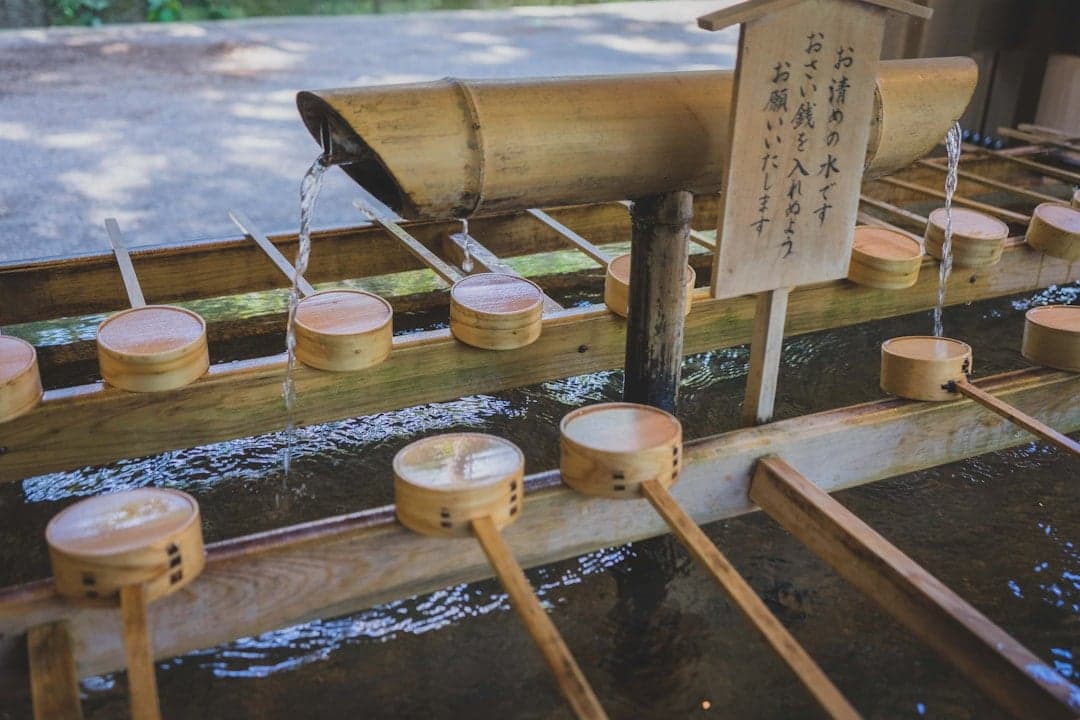
Think of the water purification ritual as similar to washing your hands before a special meal – it's a way of showing respect and preparing yourself for something meaningful. Just as you wouldn't walk into someone's home with muddy shoes, this ritual ensures you approach sacred spaces with both physical and spiritual cleanliness.
What You'll See
As you approach any temple or shrine in Japan, you'll notice a distinctive water basin area near the entrance, typically sheltered by a simple roof. At Shinto shrines, this is called a chōzuya (手水舎) or temizuya, while at Buddhist temples, you might encounter a tsukubai (蹲踞) – a lower stone basin where you crouch to wash. Both serve the same essential purpose: ritual purification before entering sacred grounds.
The basin itself – called a chōzubachi (手水鉢) – is usually made of stone and filled with continuously flowing clear water. You'll find wooden ladles (hishaku) resting on a rack across the basin, waiting to be used.
The Ritual: Step by Step
The entire purification process, known as temizu or chōzu (手水), should be performed with a single scoop of water. Here's how:
- Approach calmly – Take a moment to compose yourself before beginning
- Pick up the ladle with your right hand and fill it with water from the basin
- Pour water over your left hand to cleanse it
- Switch the ladle to your left hand and pour water over your right hand
- Transfer the ladle back to your right hand, pour a small amount of water into your cupped left hand, and use it to rinse your mouth (don't drink the water – discreetly spit it beside the basin, not into it)
- Cleanse your left hand again with a small amount of water
- Hold the ladle vertically so the remaining water runs down the handle, cleansing it for the next person
- Place the ladle back on the rack, bowl-side down
Understanding the Deeper Meaning
This ritual is a simplified version of misogi – the ancient full-body purification traditionally performed in natural rivers or the ocean. The practice reflects the deep Japanese cultural emphasis on purity (kegare and harae), both physical and spiritual. By performing temizu, you're symbolically washing away worldly concerns and impurities, allowing you to approach the divine with a clear mind and pure heart.
At famous sites like Ise Grand Shrine, visitors still perform the traditional river purification at the Isuzu River, connecting directly with centuries-old practices.
Temple vs. Shrine: Any Differences?
While the basic ritual remains the same, you might notice subtle differences:
- Height: Temple basins (tsukubai) are often set lower, requiring you to crouch – an act of humility particularly important in tea ceremony traditions
- Water source: Some temples feature bamboo pipes (kakei) delivering water to the basin
- Setting: Shrine basins are typically more prominent and closer to the main path, while temple basins might be tucked into garden settings
Modern Adaptations
Since 2020, many temples and shrines have adapted their purification areas for health safety:
- Some have removed shared ladles, installing hands-free water dispensers
- Others feature beautiful hanachōzu (花手水) – basins filled with floating flowers instead of water, creating stunning photo opportunities
- Hand sanitizer stations sometimes supplement or replace traditional water basins
Cultural Etiquette Tips
- If there's a line, wait patiently for your turn
- Use only the amount of water you need – one ladleful is traditional
- Never drink directly from the ladle or touch it to your lips
- Keep your movements deliberate and respectful – this isn't just washing; it's a ritual
- If you make a mistake, don't worry – the intention to show respect matters most
Special Locations to Experience Temizu
Each location offers its own unique atmosphere for this ritual:
- Ise Grand Shrine (Mie) – Experience traditional river purification at the Isuzu River
- Fushimi Inari Taisha (Kyoto) – Multiple purification stations along the famous torii path
- Ryōan-ji Temple (Kyoto) – Home to the famous philosophical tsukubai with its "I only know plenty" inscription
- Itsukushima Shrine (Hiroshima) – Purify yourself with a view of the floating torii
Remember: This ritual isn't just about following rules – it's about taking a moment to transition from the everyday world into a space of reflection and reverence. Whether you're collecting goshuin, praying for good fortune, or simply appreciating the architecture, starting with temizu helps you engage more deeply with these sacred spaces.
Get Started
Begin Your Cultural Adventure Today
Download Goshuin Atlas from the App Store and unlock a deeper, more meaningful way to experience Japan's rich cultural heritage.

Requires iOS 18.6 or later. iPhone only. iPad, Mac, and Vision OS coming soon.
Newsletter
stay updated
Get updates about new features and temple discoveries.